Fact Blog
Social Media Algorithms Can Amplify Political Division — A Study of 2,000 US Participants
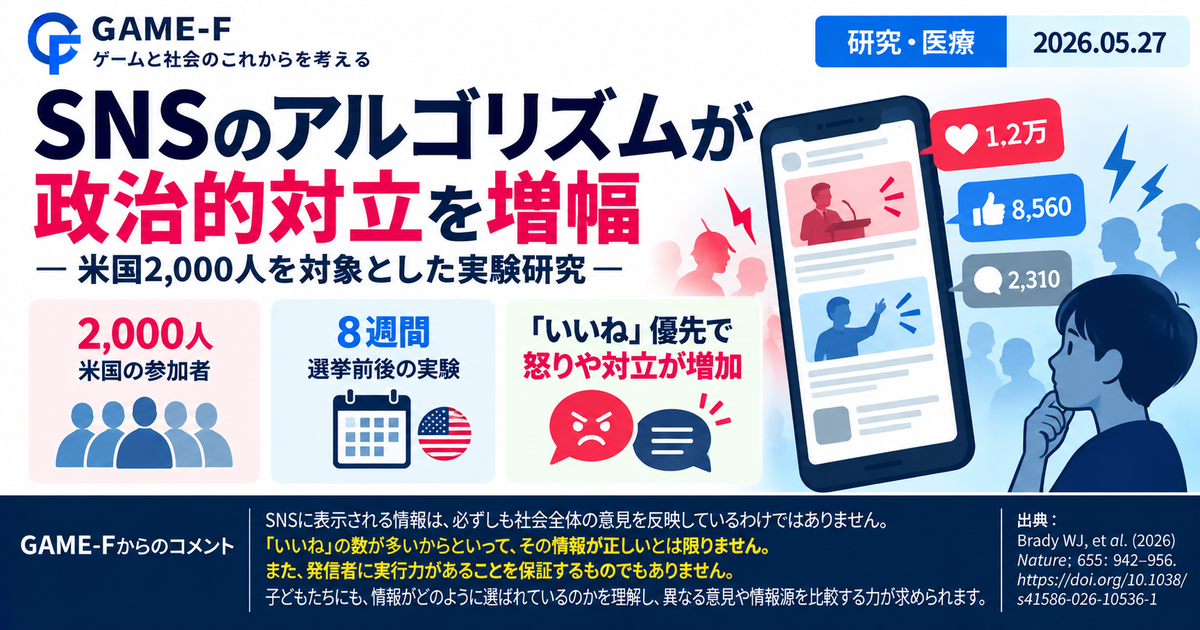
In May 2026, a study published in Nature examined how social media algorithms influence people's perceptions of political disagreement.
Researchers compared different social media feed algorithms among approximately 2,000 participants over eight weeks surrounding the 2024 US presidential election.
They found that algorithms prioritizing likes and other user engagement increased exposure to posts expressing anger, political conflict, and harmful content. Participants also perceived greater hostility between opposing political groups than was actually present.
In contrast, a new algorithm designed to reduce the influence of users expressing extreme views decreased exposure to harmful content and improved perceptions of social norms, while maintaining a similar level of user satisfaction.
The findings suggest that how social media platforms select and display information can influence how people understand society.
Comment from GAME-F
Information displayed on social media does not necessarily reflect the views of society as a whole. A large number of “likes” does not necessarily mean that the information is accurate. Nor does it guarantee that the person posting it has the ability to put ideas into action. This study shows how social media algorithms may amplify perceptions of political division and how changes to these algorithms could reduce such effects.
Children and young people also need to understand how online information is selected and develop the ability to compare different viewpoints and information sources.
References
Brady WJ, et al. Redesigning algorithms to intervene on social norm misperceptions during a national election. Nature. 2026;655:942–956.


Latest Fact Blog
-
Society & Policy2026.10.16Major Data Breaches Across Japan — Millions of Records Exposed and the Vulnerabilities of a Digital Society
-
Society & Policy2026.10.15“Keep Filming!” — Smartphones as Tools for Protecting Children's Rights During Student Protests in France
-
Research & Health2026.10.04Short-Form Video Addiction and Declining “Future Thinking” — A One-Year Study of 1,567 Chinese Adolescents