Fact Blog
Japan Proposes Age-Based Guidance for Children's Social Media Use—From Parental Control to Growing Independence
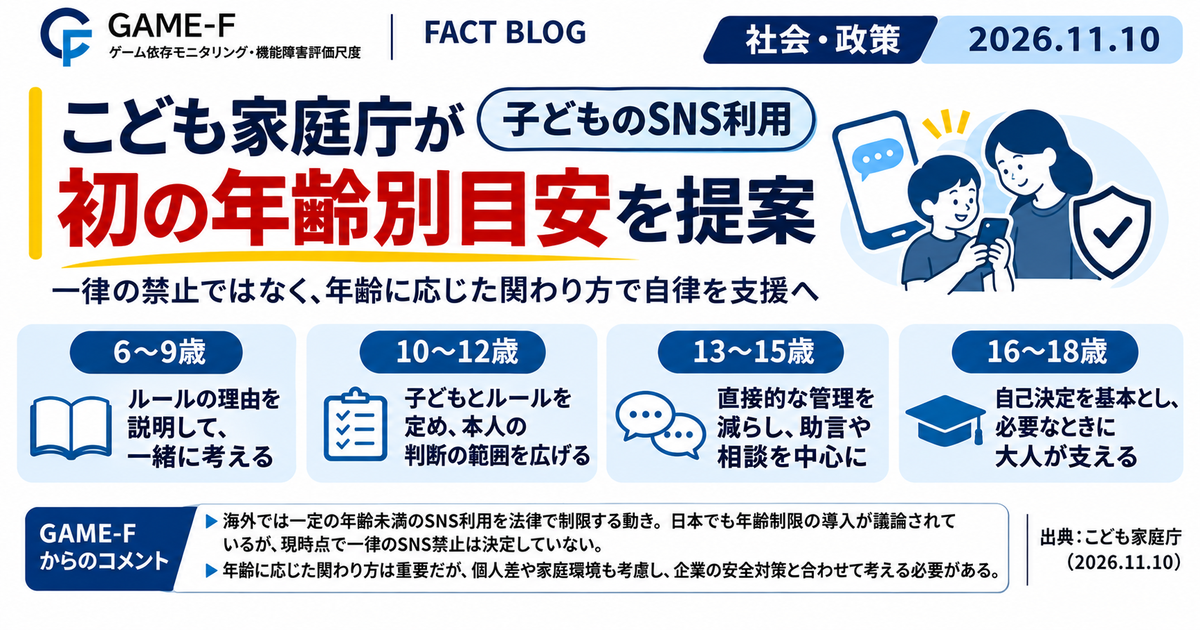
On November 10, 2026, Japan's Children and Families Agency presented a draft framework outlining how parents and caregivers should support children's internet use according to their age and developmental stage. As concerns grow over online victimization, cyberbullying, and excessive screen use, this marks the first time the Japanese government has proposed such detailed age-specific guidance.
Under the proposal, parents of children aged 6–9 are encouraged to explain the reasons behind rules and discuss them together. For children aged 10–12, parents should involve them in setting rules and gradually expand their opportunities to make independent decisions. For adolescents aged 13–15, direct parental supervision should progressively shift toward advice and consultation. For those aged 16–18, the framework emphasizes young people's own decision-making, with adult support available when needed.
Meanwhile, several countries, including Australia, have introduced or pursued legal restrictions on social media access for younger users. Japan is also considering possible age restrictions and revisions to its legislation on children's online safety. However, no nationwide blanket ban on children's social media use has been adopted.
Comment from GAME-F
Adapting parental involvement to children's developmental stages is an important approach to digital well-being. Younger children need adult protection, while growing independence requires opportunities to develop judgment, self-regulation, and responsible digital habits.
However, children of the same age may differ considerably in developmental characteristics, family circumstances, and digital experience. Age alone cannot determine what constitutes appropriate internet use. Furthermore, family rules cannot fully prevent excessive social media use or exposure to harmful content. Technology companies also have a responsibility to provide safer digital environments for children.
What matters is not simply how long children spend online, but how digital activities affect their daily lives, including sleep, education, and relationships with family and friends. Rather than merely restricting children's access to digital society, we need systems that help them develop safe and independent digital habits while identifying emerging problems early and providing appropriate support.
Should children's social media use be restricted primarily by age, or should policy focus on supporting their growing independence? Japan's new proposal offers an important opportunity to reconsider how children's rights and safety can be protected together.
References
こども家庭庁(2026年11月10日)「年齢と発達段階に応じたこどもの保護の在り方」に関する検討資料
https://www.cfa.go.jp/assets/contents/node/basic_page/field_ref_resources/d83aacab-197b-47fb-8815-6a5abb7afb07/d40414bd/20261109_councils_internet-kaigi_d83aacab_03.pdf
FBS福岡放送(2026年11月22日)「子どものスマホ・SNS 家庭でのルールは?」
https://news.livedoor.com/article/detail/32872823/


Latest Fact Blog
-
Business2026.11.20GTA 6 Generates Approximately $6 Billion on Its First Day—Gaming Industry Growth and Age Ratings
-
Business2026.11.09Capcom's Sales Rise 49%: The Strategy Behind Long-Selling Games
-
Business2026.11.05Nintendo's Revenue Falls 12% While Operating Profit Rises 49% — What Drives Profitability in the Gaming Industry?
Category
Archive
- 2026-11 (4)
- 2026-10 (6)
- 2026-9 (12)
- 2026-8 (11)
- 2026-7 (5)
- 2026-6 (3)
- 2026-5 (2)
- 2026-4 (2)
- 2026-3 (3)
- 2026-2 (1)
- 2026-1 (2)
- 2025-12 (1)
- 2025-10 (1)
- 2025-9 (3)
- 2025-7 (2)
- 2025-6 (1)
- 2025-3 (1)
- 2024-11 (1)
- 2024-9 (1)
- 2024-8 (2)
- 2024-4 (1)
- 2024-3 (1)
- 2023-8 (1)
- 2023-7 (1)
- 2022-11 (1)
- 2022-9 (1)
- 2022-7 (1)
- 2022-6 (1)
- 2022-4 (1)
- 2022-1 (1)